Something Borrowed, Something Deleted: The Cold Science of Celebrity Wedding Photo Purges
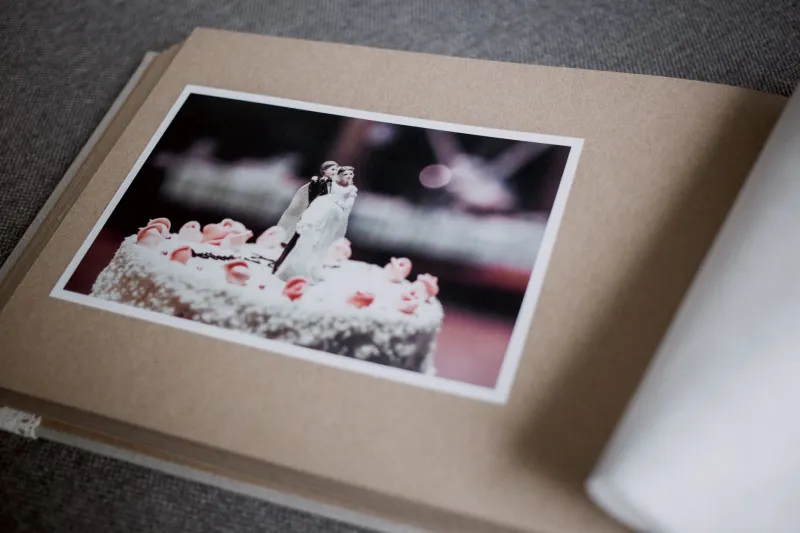
There is a specific kind of audacity required to spend $400,000 on a wedding and then, approximately fourteen months later, act like the whole thing was a particularly vivid fever dream. And yet, here we are — living in an era where celebrity wedding photos don't just fade from memory. They get actively, methodically, surgically removed from the public record, one tap at a time, usually around 11:47 PM on a Tuesday.
Welcome to the Great Untagging. Pull up a chair. Someone's marriage is about to become a case study.
The Anatomy of a Digital Dissolution
Let's be clear about what we're talking about, because there's an art to this that deserves proper acknowledgment. We are not discussing the casual archive — that gentle Instagram feature that lets you quietly slide a post into a private folder where only you and your shame can see it. We are talking about full deletion. The kind where a post that once received 2.3 million likes simply ceases to exist, replaced only by the faint ghost of a broken link and the collective memory of several thousand fan accounts who screenshotted everything.
The timeline is remarkably consistent across cases, which is either deeply revealing or deeply depressing, depending on how much iced coffee you've had today. Based on publicly documented patterns, it tends to look something like this:
Month 1-6 post-wedding: Every photo stays up. Comments remain open. The couple is still tagging each other with abandon, deploying heart emojis at a rate that would concern a cardiologist.
Month 7-10: The tagging slows. New couple photos become sparse. The last joint post sits at the top of the grid like a guest who doesn't know the party ended.
Month 11-14: Someone archives the wedding album. Not deletes — archives. This is a trial run. A toe in the water. A 'let's see if anyone notices.'
Month 15-18: The nuclear option. Posts gone. Tags removed. Captions that once read 'my forever person' now exist only in the Wayback Machine and in the trauma responses of devoted fan accounts.
The Metadata Doesn't Lie (Unlike the Vows)
Here's where it gets genuinely interesting, and by 'interesting' we mean 'invasive in a way that should probably concern us all but honestly doesn't.' Instagram's metadata — the invisible data layer attached to every post — records not just when something was posted, but patterns around when accounts are most active, when engagement spikes, and crucially, when mass deletion events occur.
Digital archivists and extremely online observers have gotten disturbingly good at cross-referencing deletion timestamps with other public signals: paparazzi photo droughts, the sudden reappearance of a celebrity at 'solo' events they used to attend as a couple, the telling moment when a spouse's name vanishes from award show thank-you speeches that are already being drafted on fan wikis.
What they've found is that the first deletion rarely happens during the loudest part of a public breakup. It happens before — sometimes weeks, occasionally months before any official statement. The Instagram grid, it turns out, is a better press release than anything a publicist writes.
One pattern that shows up with almost comedic regularity: the wedding anniversary post. Couples who are quietly imploding will often skip the anniversary post entirely — no 'can't believe it's been two years!' — and that absence is louder than any caption ever could be. The internet, bless its obsessive heart, notices.
Case Studies in Retroactive Romance Revision
Without naming names in ways that would require us to hire lawyers (hi, lawyers), the documented landscape of celebrity wedding photo purges includes some genuinely spectacular examples of digital revisionism.
There's the category we call The Slow Bleed: a methodical removal of couple content over six to eight months, so gradual that casual followers don't notice until the grid is suddenly, completely solo. This is the work of someone with a plan, a spreadsheet, and possibly a therapist who specializes in 'conscious uncoupling from your own Instagram archive.'
Then there's The Scorched Earth: one mass deletion event, often occurring between midnight and 3 AM Eastern, that removes dozens of posts simultaneously. Fan accounts wake up to a landscape transformed. This is the digital equivalent of showing up to find someone has removed all their furniture from your shared apartment overnight. Efficient. Devastating. Strangely impressive.
And finally, the most psychologically complex category: The Selective Purge. This is where some wedding photos remain — usually ones where the celebrity looks extraordinary — while photos featuring the ex prominently are quietly vaporized. The wedding still 'happened,' technically. It just apparently happened at a beautiful venue with no other people in it.
What the Fans Know That the Publicists Don't
The truly remarkable thing about the Great Untagging phenomenon is that fan communities have become better at reading these signals than most entertainment journalists. Dedicated accounts exist solely to archive celebrity social media in real time, specifically because everyone involved understands that today's 'forever' is tomorrow's missing post.
These archivists — and we use that term with complete sincerity, because what they're doing is genuinely a form of digital preservation — have documented enough cases to build predictive models. Certain deletion patterns now function as early warning systems. When a celebrity who posts couple content daily suddenly goes three weeks without a joint photo, the fan accounts start the countdown.
Is this invasive? Probably. Is it a completely natural response to celebrities who built their entire brand on performing a relationship for public consumption and then act shocked when the public wants to understand what happened to it? Also yes.
The Irony Nobody's Addressing
Here's the part that keeps this whole phenomenon from being merely sad and pushes it firmly into the territory of darkly comedic: the wedding photos that get deleted are almost always the ones that were most aggressively publicized in the first place.
We're talking exclusive magazine deals. We're talking coordinated social media rollouts. We're talking about couples who gave interviews about their 'intentional partnership' and 'shared vision for the future' and then, roughly eighteen months later, are pretending the whole thing is classified information.
The more public the wedding, the more dramatic the eventual purge. It's almost a mathematical relationship. And the internet, which has an infinite memory and absolutely no chill, keeps every receipt.
So the next time a celebrity posts a wedding photo with a caption that reads like a Hallmark card written by someone who just discovered what 'soulmate' means — screenshot it. Not because you're cynical. Because you're a historian. And history, as Instagram's delete button is constantly reminding us, is a lot more fragile than it used to be.
iSteal.me: We didn't archive their wedding photos. But someone did.