Slide Into Oblivion: The Celebrity DM Disasters That Proved Famous People Have Zero Chill
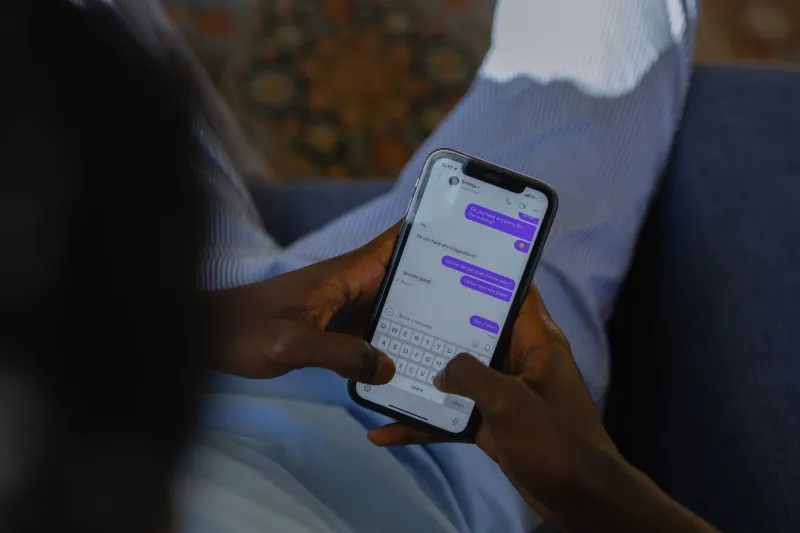
There is a particular kind of arrogance required to be famous, wealthy, and surrounded by professionals whose entire job is to protect your reputation—and still type something catastrophically stupid into a chat window. Not once. Repeatedly. With enthusiasm.
Welcome to the golden age of the celebrity DM leak, where 'but that was private!' has replaced 'my account was hacked' as the flimsiest excuse in Hollywood's increasingly threadbare playbook.
The Illusion of the Locked Door
Here is what celebrities appear to genuinely believe: that a direct message is a confession booth. Sealed. Sacred. Bound by some unspoken code of digital honor that has never, not once in the history of the internet, actually held up.
The math here is brutally simple. Every DM you send exists on at least two devices—yours and the recipient's. You control exactly one of those. The moment you hit send, you have entered into a trust agreement with another human being, possibly someone you met at a party in 2019, and you are banking your entire career on their loyalty and their phone's screenshot button remaining unacquainted.
Spoiler: they always meet eventually.
Professional athletes have fired off messages to side pieces while their brand partnerships were literally loading on another tab. Actors have trash-talked co-stars in group chats that somehow included someone who had a podcast. Musicians have negotiated shady deals over Instagram DMs like they were haggling at a flea market, apparently unaware that Instagram is owned by a corporation that has faced more congressional hearings than most senators.
The Taxonomy of Celebrity DM Stupidity
Not all leaked messages are created equal. After rigorous scientific analysis (we scrolled for a very long time), we've identified four distinct categories of celebrity DM catastrophe.
The Accidental Honesty DM. This is the message where a celebrity says exactly what they think about a colleague, a fan, or a situation, having apparently forgotten that 'private' and 'permanent' are not synonyms. These are often the most entertaining because they reveal that the carefully crafted public persona is just a very expensive costume. The real person underneath types in lowercase, uses 'lol' as punctuation, and has opinions about their castmates that would make a union rep cry.
The Negotiation DM. Someone thought they were being clever conducting sensitive business over a platform designed for sharing brunch photos. These messages tend to surface during lawsuits, divorces, or the specific moment when a business partnership dissolves and the other party suddenly remembers they saved everything. Courts have a charming habit of treating your 'yo can we just cut them out and not tell anyone lol' message as legally admissible evidence.
The Thirst DM. Famous person, sliding into someone's inbox with the confidence of a person who has never experienced consequences. The recipient, for reasons ranging from revenge to rent money, eventually shares the exchange. The famous person's team then releases a statement about 'a private conversation being weaponized,' which is technically accurate and also completely beside the point.
The Accidental Group Chat DM. The nuclear option. Someone adds the wrong person. Someone screenshots and exits. Someone's entire professional reputation evaporates before the weekend.
'But That Was Private!' and Other Legally Dubious Positions
The response to a leaked DM has become almost as predictable as the leak itself. First comes the denial, usually vague enough to technically not be a lie. Then comes the acknowledgment that yes, the messages are real, but they have been 'taken out of context,' a phrase that has done more heavy lifting in celebrity PR than any human being should ever be asked to do.
Context, in these cases, is doing extraordinary work. The context being invoked is apparently a parallel universe where the words on the screen mean something entirely different from what they say. It's a bold legal and rhetorical strategy.
The privacy argument is slightly more interesting, because it's not entirely wrong. There is a legitimate conversation to be had about the ethics of leaking private communications. That conversation becomes significantly harder to have sympathetically when the messages in question reveal that the person demanding privacy was doing something they absolutely knew was wrong when they typed it.
The OpSec Hall of Shame
Some celebrities are simply worse at this than others. The truly gifted disaster artists conduct sensitive conversations on the same accounts they use to post sponsored content for protein powder. They respond to extremely compromising messages with voice memos. They screenshot their own conversations and then accidentally post them to their stories for eleven minutes, which is eleven minutes longer than it takes for someone to save it.
The professionals—and there are a few—use encrypted apps, burner accounts, or the radical innovation of simply not typing things they wouldn't want read aloud in a deposition. These people are boring and we have nothing to write about them.
What the Leaks Actually Reveal
Strip away the gossip and the schadenfreude for a moment, and what the celebrity DM leak phenomenon actually exposes is something almost poignant: famous people are, in private, exactly as messy and petty and hormonally chaotic as everyone else. The difference is that everyone else's terrible texts stay between them and their group chat.
Celebrity is, among other things, a massive and expensive performance of having it together. The DM leak is the curtain falling mid-act. And every time it happens—every time another carefully managed public image gets torched by a message that starts with 'ok but don't tell anyone'—the lesson remains unlearned.
Because there will always be another message. There will always be another recipient who decides the agreement was void. And there will always be someone at iSteal.me, refreshing the timeline, absolutely ready for it.