Row F, Seat 12: The Leaked Seating Chart Is Hollywood's Coldest, Pettiest Weapon
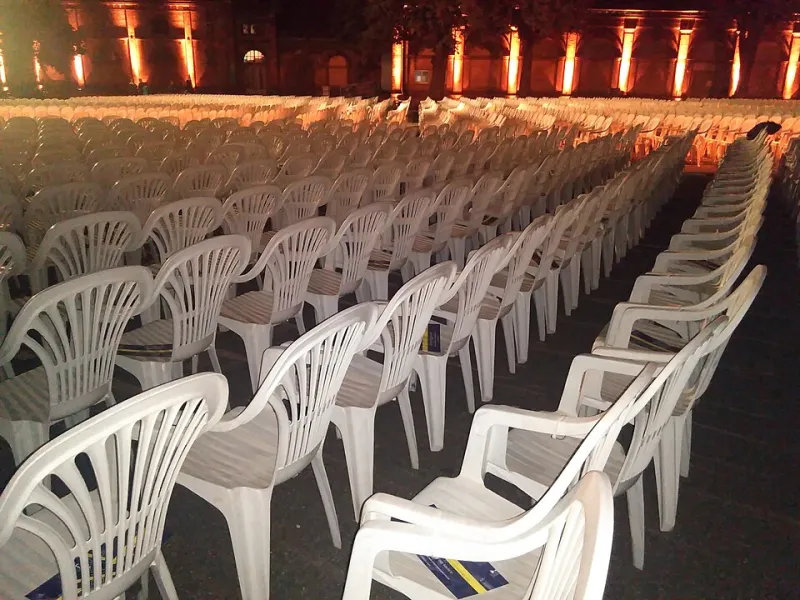
Photo: Hrrg123, CC BY-SA 4.0, via Wikimedia Commons
Every awards season, the same ritual unfolds: a hundred famous people are asked who they're wearing, and a hundred famous people give the same breathless answer while their representatives quietly review a document no one outside the room is supposed to see. That document is not a contract. It is not a script. It is a laminated grid with numbered rows, and it decides everything.
The dress is a mood. The seating chart is a verdict.
The Grid Is the Actual Show
Consider what a seating chart has to accomplish. It must separate people who are legally required to be separated. It must cosplay as a meritocracy while being a caste system. It must place the current frontrunner where cameras can find them and the former frontrunner where cameras cannot. It must anticipate who will win, who will lose, who will leave early, and who will spend the entire evening staring at the back of a rival's head with the focused intensity of a sniper.
All of that, crammed into a spreadsheet maintained by a producer with a headset and the thousand-yard stare of a man who has personally escorted six publicists out of a greenroom.
A Field Guide to the Sightlines
Seating charts are usually leaked in the same way everything else leaks: someone photographs a monitor, someone photographs the photograph, and eleven minutes later the whole thing is on the internet with a red circle around one name and no explanation.
Once the grid is public, the reading begins. The amateurs look for who is sitting next to whom. The professionals look at the geometry.
- Row A, center aisle: the winner's slot. Ten feet from the stage, fully in frame for every reaction shot, positioned so that the eventual walk up the stairs is a clean, uninterrupted hero shot. This seat is not assigned. It is prophesied.
- Row A, inner seat: noble but wrong. Great for a bit part in someone else's triumph, terrible for an acceptance speech that requires a graceful path through a forest of knees.
- Row B: the polite demotion. Still visible, technically important, definitively not the protagonist. Row B is where a nominee sits when the show wants them on camera but not too close to anyone with a microphone.
- Row F through H: the diplomatic middle. This is where a studio parks a very famous person who is promoting nothing and therefore must be visible but not featured. It is the human equivalent of a brand logo in the background of a press conference.
- Behind the camera crane: not a seating assignment. A message.
The Aisle Is a Personality Test
An aisle seat says several things at once: you are important enough to leave when you want, and important enough that your leaving is worth covering. It is the architectural expression of the phrase “let me know when it's over.” Two people on the same aisle in the same row can be having wildly different evenings, and the chart does not care.
The Camera-Crane Exile Zone
Every venue has one. It is the triangular dead spot where the boom swings, where the light goes green, and where a famous person can, if they are very unlucky, watch an entire broadcast happen at an angle. Nobody sits there by choice. Somebody always sits there, and getting that somebody to accept it requires a conversation that has ended more friendships than a group chat about wedding budgets.
The Ex Proximity Clause
This is the load-bearing anxiety of the entire enterprise. Two people who were photographed together for four years and then issued two perfectly cordial, perfectly contradictory statements about “respecting each other's journey” cannot be seated within hugging distance. They also cannot be seated so far apart that their separation becomes the story. The optimal placement is three rows and one obstructed sightline — close enough to seem adult, far enough that neither has to perform a facial expression for a camera.
Historically, this has been solved with one of three methods: a professional athlete in a very large jacket placed between them, a plus-one who has no idea any of this is happening, or sheer wishful thinking. Only one of those reliably works.
What Happens When It Leaks
A leaked chart detonates on a schedule. First comes the screenshot. Then comes the annotated version with arrows. Then comes the account that posts a fifteen-minute video explaining why one specific row assignment proves a friendship has ended. By evening, three outlets are reporting the chart as if it were a sworn deposition, and by morning the producer is telling a room of publicists that the chart is “a preliminary working document” and that everyone should really have a sense of humor about it.
Nobody has a sense of humor about it.
The Laminated Truth
Here is the thing the industry will never say out loud: the seating chart is honest in a way nothing else in awards season is. Speeches are workshopped. Outfits are sponsored. Interviews are scripted. But the grid merely reflects who matters this year, who mattered last year, and who has been politely repositioned to the outer edges of an auditorium and a narrative.
We Didn't Make This Up. (Okay, Maybe We Did.)