Hollywood Heists, Rated: Which Movie Mansion Robbery Could Actually Work in Real Life?
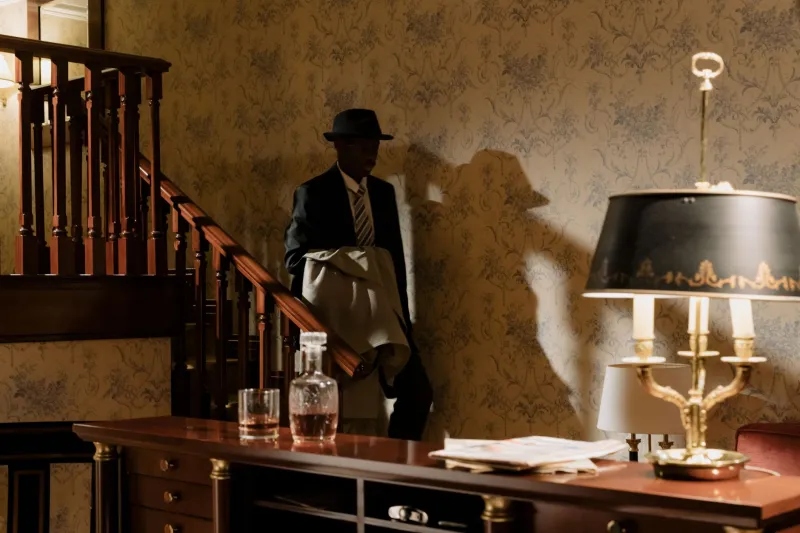
Look, we're not encouraging anything. We're a satire website called iSteal.me — the irony is baked into our URL. But when Hollywood keeps pumping out elaborate mansion heist movies with the confidence of a guy who Googled "how do lasers work" for forty-five seconds, someone has to hold them accountable.
So we did what any responsible entertainment website would do: we rewatched a bunch of heist films, took notes, and then called actual security consultants and a former insurance fraud investigator named Gary (he asked us not to use his last name, which, fair) to rate the realism. The results were enlightening, occasionally humbling, and Gary laughed at us more than once.
Here's how we scored each heist: Plausibility (1–10), Stupidity of the Guards (1–10, higher is worse), and a "Gary's Reaction" rating measured in audible sighs.
Ocean's Eleven (2001) — The Bellagio, Las Vegas
Plausibility: 4/10 | Guard Stupidity: 8/10 | Gary's Sighs: 4
Okay, technically this isn't a celebrity mansion — it's a casino. But hear us out: the Bellagio is basically Steve Wynn's living room, and that counts. The plan involves a fake SWAT raid, a pinch device that kills electricity, and a man folded inside a cart like a very flexible burrito.
Gary's verdict? "The social engineering elements — impersonating officials, creating distractions — those are genuinely how fraud happens. The rest is a movie that really, really loves itself." The vault sequence, he told us, ignores the fact that modern casino vaults have biometric verification and redundant power systems. The pinch device would've knocked out the backup generators for approximately six seconds before everything came back online.
Still, the distraction choreography? Chef's kiss. Ineffective, but elegant.
The Italian Job (2003) — Edward Norton's LA Mansion
Plausibility: 6/10 | Guard Stupidity: 6/10 | Gary's Sighs: 2
This one actually made Gary sit up straighter, which is high praise. The crew identifies a specific structural weakness (the floor safe behind a wall), uses Mini Coopers through the LA storm drain system, and exploits traffic infrastructure to create gridlock. These are all real categories of crime that have happened in various forms.
"Tunnel-based theft? Happens more than people think," Gary said, in a tone that suggested he'd seen some things. "Infrastructure manipulation to stall pursuit? Absolutely a tactic." The weak point, he noted, is the reliance on zero police improvisation. Real law enforcement doesn't just sit in traffic going 'welp.' They have helicopters. Lots of helicopters.
But relative to the rest of this list? Genuinely impressive research, Hollywood.
Entrapment (1999) — The Skyscraper Vault Scene
Plausibility: 1/10 | Guard Stupidity: 11/10 | Gary's Sighs: 7
Catherine Zeta-Jones. Laser grid. That iconic pose. Look — we get it. But Gary nearly hung up the phone.
"Laser grids like that don't exist in commercial security," he said flatly. "Motion sensors exist. Pressure pads exist. Infrared beams exist, but they're not arranged in a way that requires someone to be extremely flexible. They're just... beams. You'd break one by sneezing in the wrong direction."
The scene also requires the villain to have designed a security system specifically defeatable by someone who does yoga. This is not how security systems are designed. We hope.
Bonus absurdity: the film climaxes on New Year's Eve because the computers reset at midnight. Gary said, and we quote: "That's not how computers work. That's not how time works."
Gone in 60 Seconds (2000) — The Warehouse/Mansion Sequence
Plausibility: 7/10 | Guard Stupidity: 5/10 | Gary's Sighs: 1
Here's the dark horse. Stealing cars to order for a crime boss — with specific VINs, specific delivery windows, and a crew operating on pure muscle memory — is disturbingly close to actual organized auto theft rings. Gary confirmed that "boost lists" are real, that professional rings operate with near-corporate efficiency, and that the film's timeline pressure mirrors genuine criminal logistics.
"The part where they boost the cars is fine. The part where Nicolas Cage jumps a drawbridge in a Shelby GT500 is... less fine," Gary said diplomatically.
We gave it high marks because the bones of the operation are solid. The Hollywood flesh draped over those bones is, naturally, ridiculous. But still: seven out of ten. Nicolas Cage's career has had worse days.
Tower Heist (2011) — The Penthouse Apartment
Plausibility: 3/10 | Guard Stupidity: 9/10 | Gary's Sighs: 5
A group of hotel employees rob a billionaire's penthouse by lowering a Ferrari down the side of a skyscraper. Gary didn't sigh. Gary laughed. Then he apologized. Then he laughed again.
The film's security failures are essentially a masterclass in what not to do: staff with unchecked building access, a single point of elevator control, and a penthouse resident who apparently never invested in interior cameras. "In real life, anyone with that much to protect has overlapping security systems," Gary said. "You'd need to defeat about six independent layers. These guys defeated zero."
Points awarded exclusively for audacity.
The Verdict
Hollywood's relationship with heist realism is essentially the same as its relationship with hacking ("I'm in!"), medicine ("he has three hours to live"), and parking in New York City (always a spot right out front). It's not about accuracy. It's about vibes.
But here's what's genuinely interesting, and what Gary kept circling back to: almost every film accidentally exposes a real vulnerability category. Social engineering. Insider access. Infrastructure exploitation. The movies get the details catastrophically wrong, but the broad strokes? Sometimes uncomfortably right.
"People think security is about technology," Gary told us before hanging up. "It's mostly about humans making bad decisions under pressure. That part, Hollywood gets exactly right."
We're choosing to take that as a compliment to the genre. Gary did not seem to intend it as one.